3
We find that the only way to truly think with everything we are is to finally start doing with everything we have.
The modern executive is not failing at discipline: they are chemically hijacked. Back-to-back meetings, 2,617 phone touches per day, and chronic cortisol exposure suppress the prefrontal cortex, erode empathy, and make deep work biologically impossible. You are running evolutionary hardware in a deliberately hostile environment. The only way out is not another app.
TL;DR
The modern executive is not failing at discipline — they are chemically hijacked. Back-to-back meetings, 2,617 phone touches per day, and chronic cortisol exposure suppress the prefrontal cortex, erode empathy, and make deep work biologically impossible. You are running evolutionary hardware in a deliberately hostile environment. The only way out is not another app.
KEY TAKEAWAYS
As I write this, my desk is less a workspace than a command center for a losing battle.
Four company email addresses. Teams, WhatsApp, LinkedIn, Slack, iMessage, all firing. A calendar of back-to-back meetings that ricochets from a performance issue, to a board report, to a client strategy session, each one demanding a different version of me at full capacity. By hour eight of a twelve-hour day, I am spent. And underneath the exhaustion is something worse: the sinking, specific feeling that I haven't done any real work.
I have processed noise. I have not found the signal.
This feeling has a name. Leaders across industries recognize it instantly when they hear it, and almost none of them talk about it openly.
It is the specific malaise of the modern executive, not the exhaustion of effort, but the exhaustion of fragmentation—the particular despair of having been productive all day at the wrong level. You have cleared the inbox, attended the calls, and responded to the pings. The dashboard looks active. But you know, in the way that the body knows things before the mind admits them, that you haven't moved the actual dial. You have been mistaking velocity for direction. And the two are not the same thing.
We are doing more than ever and achieving less depth. The problem isn't pace. It's the fact that the pace is being applied in the wrong direction.
The disruption of AI has compounded this. A technology with more sweeping societal impact than the internet has simultaneously destroyed many companies' defensive moats, democratized innovation, and dropped the barrier to entry for new digital products to near zero. The competitive noise has compounded. The pressure to adapt has intensified. The window for deep thought has narrowed further still.
How many times are you on your phone in a meeting right now? Be honest. How often is your time fractured between two obligations simultaneously, or three? Add the hours scrolled on social media, the notifications processed, the micro-decisions made. How can you possibly lead others with this behavior? We were not designed for this. The evidence is accumulating that the environment is not merely inconvenient. It is physiologically hostile.
Contrast this to another type of leader, an embodied leader in the wild.
The Silverback Gorilla. In nature, he does five specific things:
He regulates, he doesn't react. When a threat arrives, the silverback becomes still before he moves. That stillness is information: the group watches him to calibrate. If he charges, they know it's real. If he doesn't move, they settle. His nervous system sets the floor for the group's.
He absorbs the external threat, so the group doesn't have to. Predators, rival males, encroaching territory: all of that is his problem. The rest of the group gets to focus on eating, raising young, and building social bonds. He takes the friction so they can do the work.
He leads by presence, not instruction. There is no delegation, no town hall, no performance review. The group orients around him spatially. Where he goes, they go. His conviction is demonstrated, not announced.
He enforces the boundary once, clearly. He doesn't escalate gradually, give warnings, or manage the situation. When a line is crossed, he responds with full force, once, and then it's over. No grudge, no drawn-out conflict, no performance. Decisive, then done.
He is most visible when things are hardest. When food is scarce, he eats last. When the path is dangerous, he goes first. The group's sense of safety is directly proportional to his willingness to be at the front of the difficult thing.
Do not confuse this embodied leadership with a masculine-only trait. A single matriarch leads the Savanna Elephant herd. The oldest, biggest female. She also decides how the herd behaves, with leadership based on wisdom and memory, not just physicality. Though she has that in abundance.
It's impossible to be an embodied leader from the neck up.
Technology shifts the focus from felt presence to informational exchange. To understand why this feels so terrible, and why it is making us weaker leaders, we have to look at the biology. We are running software designed for the natural world on hardware plugged into a global, infinite digital matrix.
The part of your brain responsible for moving the dial on strategy, complex decision-making, empathy, and long-term planning is the Prefrontal Cortex (PFC). It is the CEO of your brain, and it has a fatal flaw: it is the most energy-expensive organ in the body and the first to fail under sustained cognitive load.
Every time you switch from a strategy document to an email, your brain is forced to context-switch. The American Psychological Association has found that shifting between tasks can cost up to 40% of productive time. Apply that to your own week. For me, even with deliberate effort to batch and protect my time, it feels like a 20% tax at minimum.
But the more devastating number is this: it takes an average of 23 minutes and 15 seconds to return to deep focus after a single interruption. If you check your phone every ten minutes, which the data suggests most executives do, you are biologically incapable of deep thought. Not less capable. Incapable. You are permanently operating in the shallows.
If you are interrupted more frequently than you can recover from, you are not doing knowledge work. You are performing the appearance of it.
Why do we do this to ourselves? Why do I check the fourth email inbox when I know the strategy document is sitting there, more important, and half-finished?
Because the real work is hard, it requires sustained effort with no immediate reward. Checking an email, clearing a notification, and firing off a Slack reply each provide a micro-dose of dopamine. It feels like productivity. It satisfies the brain's completion bias. We are, in the most clinical sense, feeding an addiction: snacking on the empty calories of information, spiking the reward circuit, while starving ourselves of the protein of deep work that generates actual satisfaction.
This is why we feel hollow. Not lazy. Not undisciplined. Chemically diverted. The system has been hacked by a thousand product designers whose entire job is to make sure you never stop checking.
It gets worse. The damage runs deeper than productivity. It is physical.
Every notification, the ping from Teams, the vibration in your pocket, the red badge on an app, is processed by your brain as a micro-threat. It triggers the orienting reflex. Your body activates something called the HPA Axis: the Hypothalamic-Pituitary-Adrenal cascade. This helps you survive a predator. Cortisol and adrenaline flood the bloodstream to get you ready to rumble!
In the acute, short-term context for which the HPA Axis evolved, it is lifesaving. In the chronic state of the modern executive, where we touch our phones an average of 2,617 times per day, we are then bathing our nervous system in a corrosive, continuous drip of stress hormones that it was never designed to sustain.
The effects are not uniform. Men under chronic cortisol load tend to detach. They become transactional, avoidant, or short-fused. Women under the same load tend to over-function: the "tend and befriend" stress response drives them to absorb more, manage more, smooth more, until the autoimmune system, the body's last line of complaint, begins to fail. Different presentations, same underlying damage.
The cost to leadership is measurable. A University of London study found that constant digital interruptions reduce an executive's effective IQ by 10 points, more than double the cognitive impact of smoking marijuana. We are, quite literally, leading our organizations while cognitively impaired by distraction.
So we are now putting off the real work, and we’re dumber. But what may be even worse is that empathy is the next casualty. A calm Prefrontal Cortex and active mirror neurons are the biological prerequisites for genuine connection with other people. When cortisol levels are elevated, the brain shifts into survival mode. In survival mode, your team stops appearing to you as humans to be led and begins appearing as obstacles to be managed or threats to be neutralized. You become transactional. Your people sense it. They always do, and so the stress propagates outward through the organization like a current.
Willpower compounds all of this. It is a finite daily resource. By 2:00 PM, after 200 emails and 40 micro-decisions, the decision tank is empty. What follows is not bad judgment. It is the absence of judgment: decisions deferred until tomorrow or made on impulse to end the cognitive pain.
Layered over all of this is a specific modern anxiety that has no historical precedent.
In Lewis Carroll's Through the Looking-Glass, the Red Queen tells Alice: "Now, here, you see, it takes all the running you can do, to keep in the same place." Evolutionary biologists borrowed the concept. So has the modern workplace.
AI has increased the metabolic rate of business. The half-life of a professional skill, that is, the period before it becomes obsolete, was estimated at roughly 30 years a generation ago. Current estimates put it at five years and shrinking fast. This is not merely a career management problem. It is a source of existential anxiety that runs beneath every leadership decision: the terror that if you stop spinning the plates for one second, you will become irrelevant.
So we add more apps. Join more channels. Attempt to drink from the firehose. The response to information overload is, paradoxically, more information. And the spiral tightens. If the speed of change continues to quicken, which it will, at what point will your biological hardware fail? For many, it’s already happened. We are seeing a huge trend for ‘Slow Living’ and nature recalibration. But for leaders who must plug into the digital highway to grow their organizations, there is no such escape. What are we supposed to do?
We have to stop blaming ourselves for a lack of discipline and recognize the truth: we are operating in a deliberately hostile environment. The environment is engineered to consume our attention. Individually, we cannot out-willpower it. We need a protocol. We need to treat attention as the scarce resource it is. As vital, as finite, and as worth protecting, as precious as the clean water I carried in my pack across the Utah desert.
In the last two months of training for the Moab 240, I had a Plantar fasciitis injury; the physical pain was often excruciating, but it was too late to reduce my training load. However, the mental task of dealing with it was mercifully simple: put one foot in front of the other, drink, eat, repeat, ignore. I found running on the edge of my foot helped reduce it, plus CBD and Ibuprofen. In the Moab 240 race, it was debilitatingly painful on day one, disappeared completely on days two and three, and returned on day four. No idea why. Despite the pain, the objective was clear. Progress was visible. Every step was either toward the finish or away from it.
Contrast that physical suffering to straightforward mental tasks in the office. Cognitive overload is accelerating for knowledge workers, but the physical requirements are near zero. We sit in ergonomic chairs and move between climate-controlled rooms. Coffee from machines that do the hard grinding is kindly brought to us during our back-to-back meetings, so we don’t even have to stand up. Movement and physical exertion removed. Is it pain-free? I know you know the answer is no. Mental environment is invisible, complex, and structurally hostile. We are digitally overloaded, chemically hijacked, and cognitively fractured. We are busy. But we are lost.
Give me the Plantar fasciitis pain I can clearly feel anytime vs the slow poison from knowledge work, that invisibly dismantles your wellbeing from within.
For years, before I could name it, I carried a specific sense that my mind-only work, the knowledge-worker existence, with its spreadsheets and strategies and screens, was leaving me operating at a fraction of what I was capable of. That somewhere in the separation of mind from body, I had unplugged something essential. And it is causing an unknown decay in my functioning, I couldn’t name. It is one of the reasons I started the business Root Astro. It feels wrong that we spend so much time with mind and body working separately.
Neuroscience has confirmed the instinct. The brain is not a self-contained processor. It is a hungry organ that depends on the body's metabolic and sensory activity to function at capacity. The discovery of the Somato-Cognitive Action Network (SCAN) reveals the executive control centers in the brain. The structures responsible for planning, complex reasoning, and high-level decision-making are physically hardwired into our motor circuits. Sedentary "thinking work" does not merely leave the body underused. It effectively unplugs the ignition to our own intelligence.
I spent years in boardrooms as a head in a jar: navigating abstract data and strategic documents while my physical self sat separate from the task at hand, dormant. I was not just getting soft. I was operating in low-power mode without knowing it.
We need to disconnect to reconnect. We need to choose hard.
Voluntary hardship is not masochism. It is a recalibration. When we step out of the ergonomic chair and into the physical grit of a vision quest, the brain stops ruminating on abstract anxieties. It begins solving the immediate, concrete problems of the physical world: gravity, fatigue, terrain. It releases Brain-Derived Neurotrophic Factor (BDNF), the Miracle-Gro of neuroplasticity. This rebuilds the neural connections that the digital environment has been slowly severing. The motor cortex re-links to the executive mind. The fog lifts. What emerges is not merely relief from stress. It is a different quality of thought entirely.
We find that the only way to truly think with everything we are is to finally start doing with everything we have.
This is a three-step tool. 1. Read each statement and check the ones that apply to your current professional life. Be honest, this is diagnostic, not evaluative. Step 2: Count your score—step 3. Review the table showing what good and bad look like, and place yourself to the left or right in each row.
Figure 3.1: Is Your Executive Nervous System in Crisis?
The diagnostic. Four phases, each more costly than the last, and most leaders are already past phase one before they start looking.
| Statement | Check |
|---|---|
| My first act of the day (within 15 minutes of waking) is checking email or messaging apps. | ☐ |
| I feel a reflexive urge to check my phone even when it hasn't pinged. | ☐ |
| I rarely spend more than 20 minutes on a single task without an interruption. | ☐ |
| I find it physically difficult to read a long document without my attention fragmenting. | ☐ |
| Statement | Check |
|---|---|
| By 4:00 PM, I defer important decisions because I lack the mental energy to weigh them. | ☐ |
| I frequently second-guess decisions made under pressure. | ☐ |
| Late in the day, I default to the easiest path rather than the most strategic one. | ☐ |
| My irritability with colleagues increases significantly in the final two hours of the workday. | ☐ |
| Statement | Check |
|---|---|
| I often finish a ten-hour day unable to name a single meaningful contribution I made. | ☐ |
| My calendar is back-to-back, with zero white space for reflection or deep work. | ☐ |
| I perform high-speed administrative work to avoid the weight of complex, strategic work. | ☐ |
| I feel a growing gap between my values and how I actually spend my hours. | ☐ |
| Statement | Check |
|---|---|
| I treat my body primarily as a vehicle to carry my head from meeting to meeting. | ☐ |
| I spend more than eight hours a day sitting and being sedentary. | ☐ |
| I rarely solve problems with my hands or engage in high-effort physical movement. | ☐ |
| I experience brain fog that caffeine does not clear. | ☐ |
Now, total up your checks from above and find your range below:
0 – 4 | The Resilient Leader You have maintained strong boundaries and protected your biological hardware. You are likely operating with high fluid intelligence and real strategic bandwidth.
5 – 9 | The Fragile Executive Yellow Zone. Your nervous system is beginning to prioritize short-term survival over long-term strategy. The fracture is early and reversible. This is the right time to act.
10+ | System Shutdown You are experiencing a full-scale Executive Nervous System Crisis. Your effective IQ is suppressed, your empathy is eroding, and your decision-making is compromised by chronic cortisol exposure. The rest of this book is for you.
Now review your score and consider what good and bad look like below, and which column you feel you mostly live in on each row:
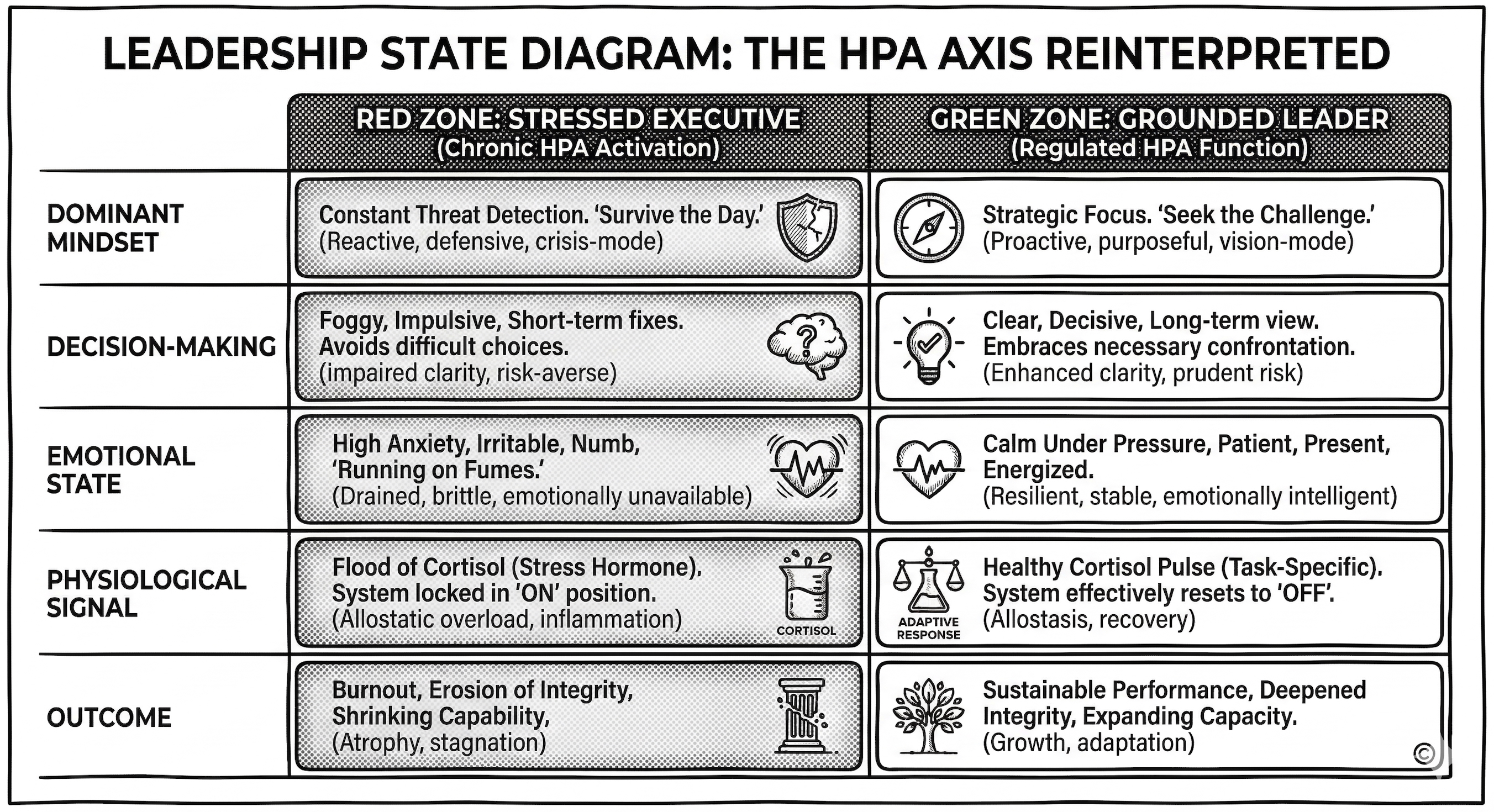
Figure 3.2: The Leadership State Diagram
Where you are operating from determines what decisions you are capable of making. This maps the terrain.
Context switching cost: American Psychological Association, shifting between tasks costs up to 40% of productive time.
Recovery time: University of California, Irvine : average 23 minutes 15 seconds to return to deep focus after interruption.
Phone touches: Dscout (2016) : average 2,617 touches per day.
IQ impact: University of London : constant digital interruptions reduce effective IQ by 10 points (vs 5 points for marijuana).
Empathy erosion: Scientific Reports (2023): high cognitive load reduces mirror neuron engagement.
AI burnout: Quantum Workplace (2024) frequent AI users report 45% higher burnout rates.
CEO mental health: 55% of CEOs reported a major mental health issue in the past year (2024), a 24-point increase.
SCAN: Somato-Cognitive Action Network, discovery linking motor circuits to executive control centers.
BDNF: Brain-Derived Neurotrophic Factor, released during physical exertion; supports neuroplasticity and synaptic repair.
All proceeds from Hard: Building Your Inner Citadel are donated to registered children's charities supporting young people, including Baby Zone and New Yorkers for Children.

By Lee Arthur
Co-founder, Root Astro · Author, Hard · Four-time CEO
The Fieldstone Letter
Hard is being serialized chapter by chapter, free to subscribers. Each new chapter arrives as it is released, and all proceeds from the book go to children's charities.
Get the next chapterDispatches from the field of human renewal. Irregular essays on leadership, nature, and the practice of becoming human again.
Subscribe