The intelligence of the hands. Why every leader has been starving it.
The Somato-Cognitive Action Network links physical engagement to executive planning capacity. Knowledge work quietly amputates it. Fire, shelter, wood: these are not metaphors for leadership. They are the operating conditions the human mind was built for. What you build at a Root Astro retreat does not come back with you. The part of you that built it does.
What you build there does not come back with you. The part of you that built it does.
There is a specific kind of intelligence you have been conducting your career without.
Not information. Not strategic judgment. Not the emotional literacy it takes to read a room. Something older and more fundamental: the intelligence of the hands. The knowledge that moves from eye to grip to outcome without the intervention of language. The part of you that already knows the answer while the prefrontal cortex is still formulating the question.
Every leader I work with has spent decades quietly starving it. Knowledge work systematically amputates the connection. We navigate spreadsheets, moderate calls, process abstractions. The physical world becomes something we move through on the way to screens. And what we do not use, the neuroscience is unambiguous, we lose. Not metaphorically. Literally: the motor circuits hardwired to our executive control centers go quiet. The Somato-Cognitive Action Network, the brain structures responsible for planning and high-level decision-making, depend on physical engagement to stay online. Sitting still in a climate-controlled room is not rest from work. It is the gradual unplugging of the machine.
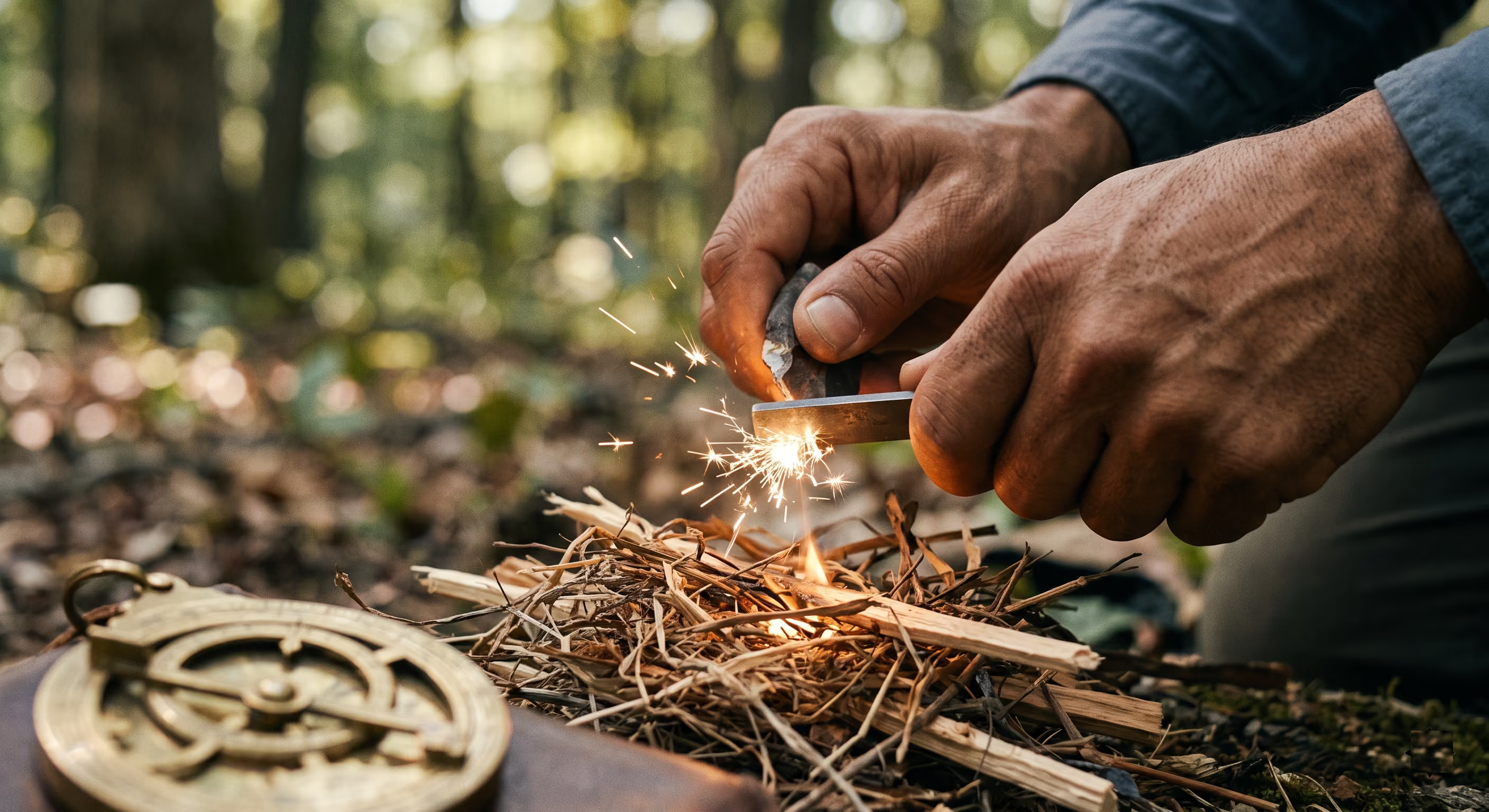
At a Root Astro retreat, the first thing that happens is fire.
Not the symbolic lighting of a wick. The real thing: learning to read a hillside for dry kindling, understanding how wind moves through a break in the treeline, building a structure that will catch before it collapses. The first attempts fail. They always do. That failure is not a problem to be managed. It is data, delivered immediately and without ambiguity, in a language older than words. Then shelter. Then water. Then wood.
This is not metaphor.
By day two, something shifts. Leaders who have been running on adrenal fumes for years begin to think differently. Not louder. Quieter, and with a different quality of precision. Fire creation, shelter building, water sourcing, and woodwork are not symbols for leadership. They are the operating conditions the human machine was actually built for: problem, material, consequence, and the specific satisfaction of something made well with your own hands. The brain does not run better in the Highlands because it is beautiful. It runs better because it is finally doing what it was built to do.
What you build there does not come back with you. The part of you that built it does.
The neuroscience behind what fragmented digital work does to executive intelligence, and why the SCAN discovery changes the recovery calculus.
The version of burnout that does not look like burnout, because you are still performing.
The machine does not run better when you give it more to process. It runs better when you give it something real to do.
KEEP READING
Dispatches from the field of human renewal. Irregular essays on leadership, nature, and the practice of becoming human again.
Subscribe