A vacation rests the body but rarely the mind. Here's what real solitude does that four days at the beach can't, and why it's the whole premise behind Still Point.
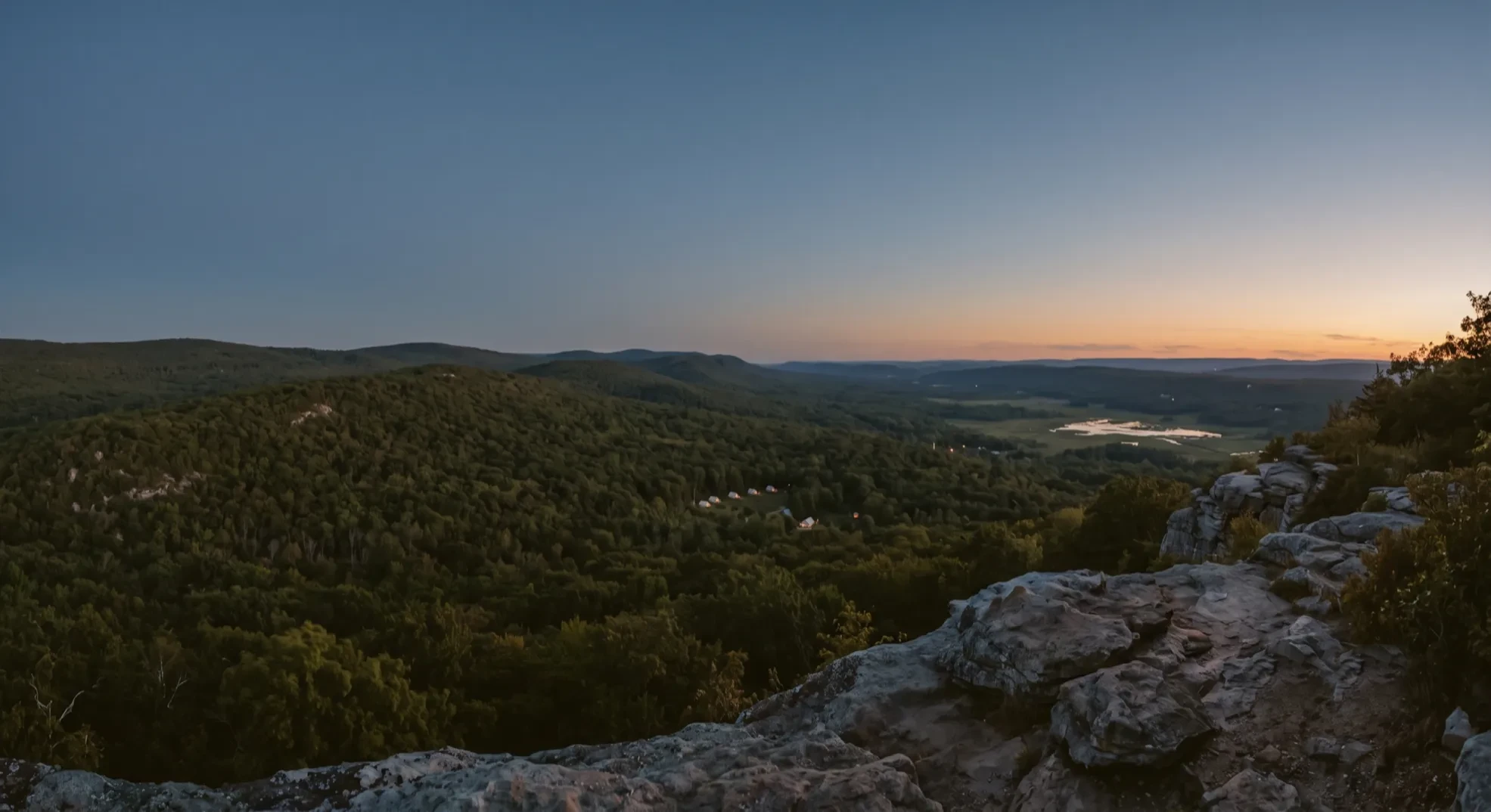
A vacation rests the body but not the mind, which is why the fatigue survives the trip. Kaplan's Attention Restoration Theory explains why: depleted attention needs an environment that asks nothing back. Root Astrolabe's Still Point residency builds that container, days alone in the Catskills, so insight can finally surface.
You do not find out what you actually think until there is no one left to perform it for.
There is a specific kind of tired that a vacation does not touch. You come back from four days at the beach, or a long weekend somewhere with a view, and by Tuesday you are exactly where you left off: reaching for the phone before your eyes are fully open, running the same three conversations on a loop, unable to finish a single thought before the next input arrives. You rested. You did not recover.
The mechanism underneath that isn't a lack of time off. It's a lack of an environment that asks nothing of your attention. Psychologist Rachel Kaplan's Attention Restoration Theory names the thing directly: directed attention, the kind you spend all day filtering signal from noise, deciding what deserves a response and what doesn't, is a finite resource. It depletes with use, the way a muscle does. Restoring it requires a setting with what she called "soft fascination": low demand, no decisions to make, nothing pulling on the part of your mind that has been on shift since your first meeting this morning.
Most vacations don't offer that. The phone still buzzes. The decisions still arrive, just from a different address. You've changed the scenery around the same depleted attention, and depleted attention doesn't restore itself just because the view improved. That's the mechanism behind the fatigue that survives the trip: not overwork, but the absence of any stretch of time engineered to require nothing back from you at all.
I have run through the night in the Utah desert with no one to talk to and no phone signal strong enough to matter. Somewhere past the point where the pain in your legs becomes just weather, it isn't your legs that start talking anymore. It's the argument you didn't finish. The thing you should have said in that meeting three weeks ago. Whatever you've been outrunning while the day still had room to stay busy. Thirty hours into that kind of silence, there is no meeting to duck into. There is only you and the thing you've been carrying, and finally, enough room to actually look at it.
Solitude is not the absence of people. It is the absence of performance.
That's the part most people miss when they picture a retreat as a nicer version of rest. What changes when you enter a space built so that nothing needs anything back from you for days at a time isn't relaxation. Relaxation is still a task, something you manage, another item to get right. What changes is access: to the parts of your own thinking you've been too occupied, too watched, too on to reach. Left alone long enough, without an audience or a deliverable, the mind doesn't spiral. It settles. And the thing you've been avoiding tends to surface on its own schedule, not yours, which is exactly why you couldn't get to it by scheduling twenty minutes for it between calls.
That's not a state you visit once and carry home intact. It's a skill, and skills need practice. My best work now comes from the same stillness the desert first showed me: not of body, but of mind, the ability to stay inside one important task for a long time and let everything else go. Some mornings that means being up at 4:30, working straight through without a single notification winning my attention, then a run afterward as the reward, not the discipline. The busy mind still shows up. It always will. But it stops sounding like a threat and starts sounding like sheep, a hundred small ba's, none of them actually dangerous, none of them as important as the work in front of me. The more you practice going quiet on purpose, the less the digital world can reach you when you let it back in. The phone becomes a tool again, not a current.
This is what a residency at Still Point is built to do. Five days, alone, in a private tent on Root Astrolabe's land in the Catskills: no group, no agenda, no one needing anything from you, guided rather than simply unattended so the silence has a container instead of just an absence. The travel industry has started calling this kind of demand "hushpitality," and more than half of American travelers now say they'd try a silent retreat if given the chance. That's not a trend. That's a lot of people quietly arriving at a conclusion their own attention already reached.
You do not find out what you actually think until there is no one left to perform it for.
KEEP READING
Dispatches from the field of human renewal. Irregular essays on leadership, nature, and the practice of becoming human again.
Subscribe