Hands · living materials
1. Fire-craft
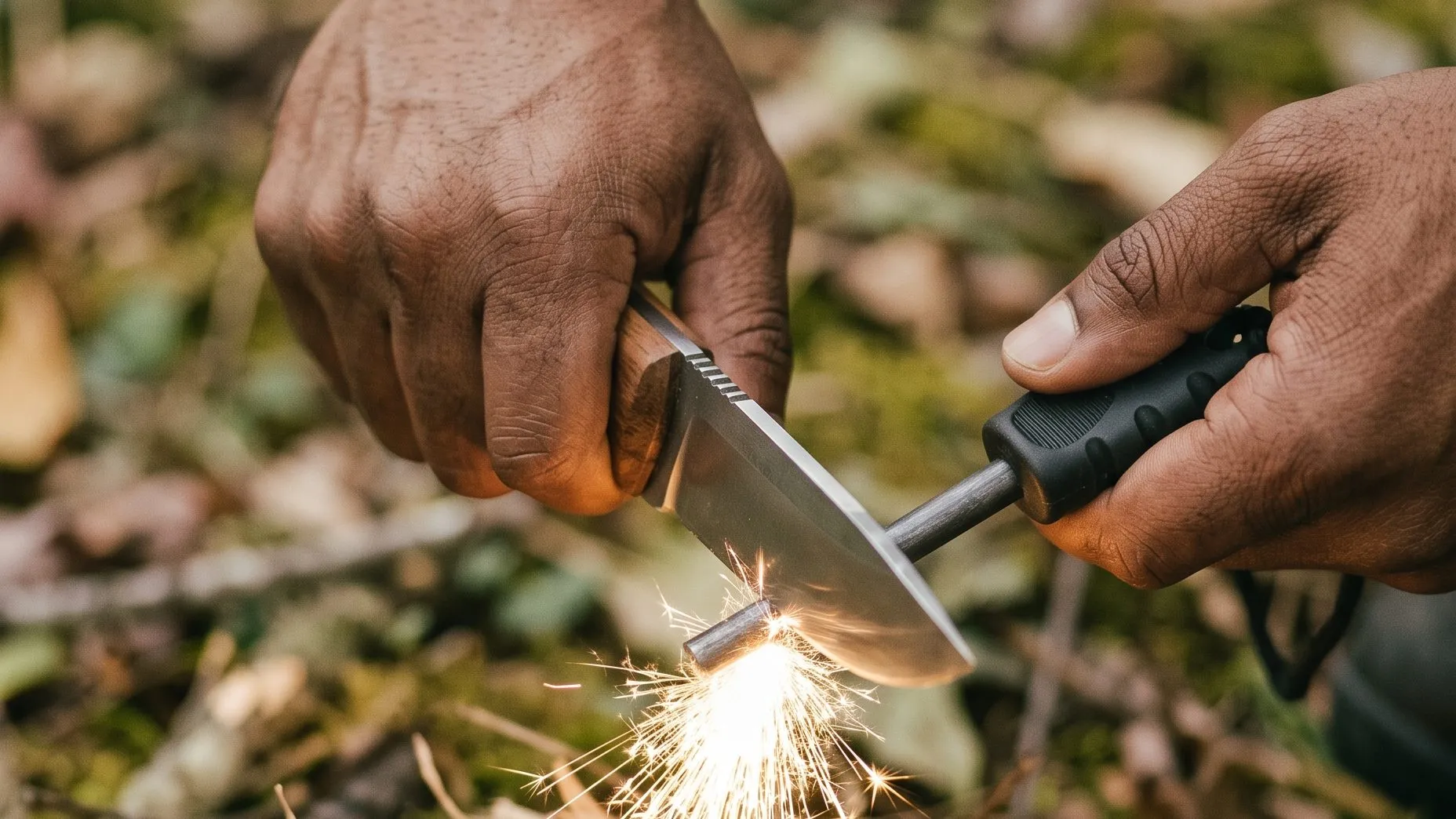
Building and lighting fire with ferro rod and flint, then keeping it. Develops sequencing under frustration, fine motor patience, weather-reading.
On the land First Fire, the match kit, the fire circle. At or near home A fire bowl, or a bushcraft day course.
One further resourceMors Kochanski, Bushcraft
2. Knife work
Whittling and carving; a spoon is the classic first project. Develops manual dexterity, tool respect, single-point attention.
On the land Around the fire, green wood from the property. At or near home A carving knife, a branch, a park bench; carving clubs exist in most cities.
One further resourceBarn the Spoon, Spon
3. The Building Task
Making something physical that must bear weight: lashings, knots, benches, raised beds. The material is irrelevant. The friction is the point. Develops consequence tolerance and structural thinking in the hands.
On the land Platform and bed projects, camp improvements each season. At or near home Build anything real; repair instead of replace.
One further resourceThe Ashley Book of Knots
Body · natural forces
4. The Hard Start
The day opens with chosen physical difficulty, outdoors, before any screen: cold, movement, weather as found. Develops state control and voluntary hardship as habit.
On the land Dawn recalibration, the morning block. Heat exists in the bathhouse sauna and steam; the cold, for now, is the shower and the seasons. At or near home Out the door at first light, a cold finish to the shower.
One further resourceScott Carney, What Doesn't Kill Us
5. Land navigation
Map, compass, terrain reading: knowing where you are without a phone. Develops spatial attention and the specific confidence of self-location, which is the whole brand in one skill.
On the land The Long Path and the Gobblers Knob junction are 150 feet from the door. At or near home An orienteering club, or a familiar town by paper map.
One further resourceTristan Gooley, The Natural Navigator
6. Archery
Stillness under intention, breath control, the release of over-gripping.
On the land The uphill range. At or near home Any archery centre; no garden needed.
One further resourceEugen Herrigel, Zen in the Art of Archery
Together · face-to-face community
7. The Communitas Meeting
One high-stakes conversation per week moved onto a trail. You are not just changing the location; you are changing the biological state that both people bring to it. Develops candor and co-regulation.
On the land It is the programming: walking sessions, the debrief. At or near home A standing weekly walk with the person the hard conversation is with.
One further resourceShane O'Mara, In Praise of Walking
8. Cooking over fire for others
Feeding people from flame, hands and time. Develops patience, service, and the oldest form of hosting.
On the land The fire circle and the outdoor table. At or near home Host device-free: one pot, real fire or a plain hearth.
One further resourceMichael Pollan, Cooked
9. The Shared Hard Thing
A regular group challenge taken together, chosen so the outcome is genuinely uncertain: a long walk, a build day, a swim, a climb. Develops communitas itself.
On the land The shared endeavour day, no assigned roles. At or near home The Monthly Hard Challenge from the book, with your team or friends.
One further resourceMichael Easter, The Comfort Crisis
Rehearsed at first light, every day here